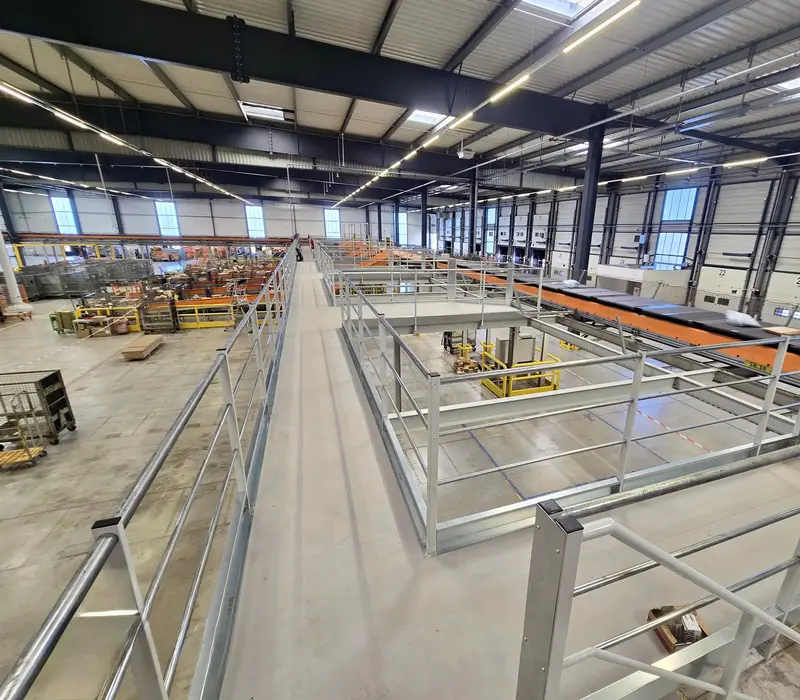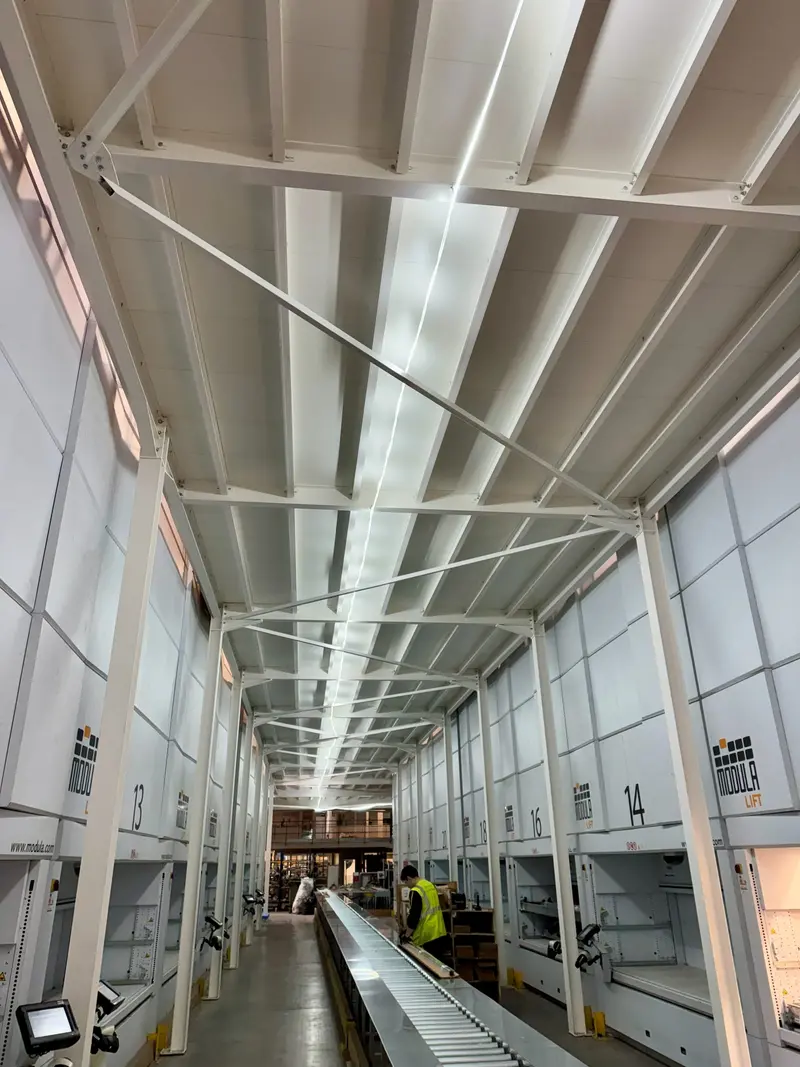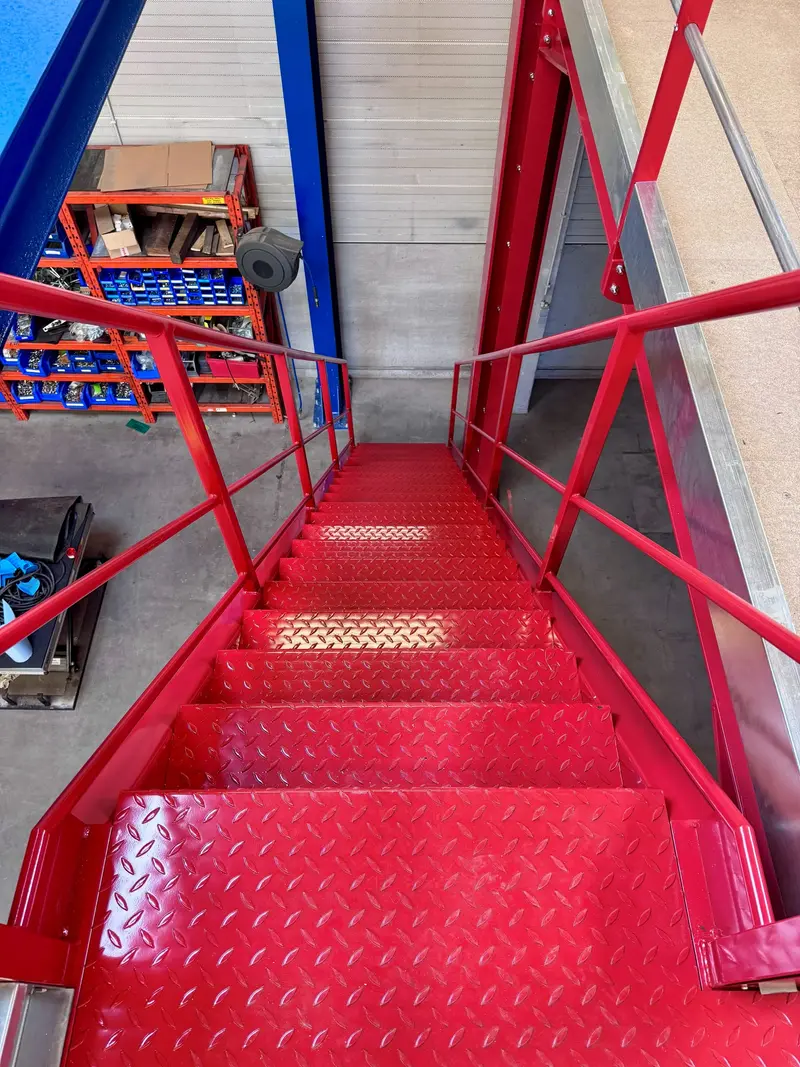
In France, all industrial and commercial warehouses are subject to property tax (taxe foncière), the amount of which largely depends on the size of the building. As an industrial mezzanine provides additional storage space without actually increasing the footprint of the warehouse, can installing a storage platform affect the taxation of your warehouse? That is the question this article sets out to answer.
This article describes the French tax system. If your site is in another country, check the rules that apply locally.
The factors involved in the taxation of a warehouse
The property tax of a warehouse is based on several criteria:
- The cadastral rental value of the building
- The classification of the warehouse
- The weighted floor area
Floor area
Although floor area is not directly a calculation criterion, it indirectly influences the amount of property tax. The larger a warehouse, the higher the property tax. However, warehouses with a floor area of no more than 100 m² may be exempt from property tax, depending on the rules of each municipality. In addition, if your warehouse is located in an urban tax-free zone (ZFU), you will also be exempt from property tax whatever its size. Note that temporary exemptions (from 2 to 5 years depending on the case) may also apply to new buildings, depending on the municipality.
Cadastral rental value
This is the tax base used to calculate property tax, which is set by local authorities. According to the French public finance directorate (DGFiP), it represents the theoretical annual rent that a property could generate if it were let under normal conditions.
Since 2017, the cadastral rental value has been calculated using a pricing grid set at département level rather than municipal level. Property tax is based on 50% of this value, at the tax rate voted by the local authorities.
Note that the 2021 Finance Act halved the tax bases for property tax and the business property contribution (CFE) for industrial premises, to take account of management, insurance, depreciation, repair and maintenance costs.
The cadastral rental value of a warehouse is calculated differently depending on the type of warehouse. Under French law, a warehouse is classed as industrial if the total value of the equipment used (technical installations, machinery, tools, etc.) exceeds €500,000. Below this threshold, the warehouse is considered commercial.
For commercial warehouses, the floor area is taken into account directly in the calculation of the rental value. A rate per m² is applied.
For industrial warehouses, the cadastral rental value is calculated using an accounting method. A percentage is applied to the cost price of fixed assets (the assets a company can use over the long term).
Warehouse classification
Since 2003 and the introduction of a classification system by the Regional Business Property Observatory (ORIE), warehouses have been classified into three categories according to specific technical criteria such as height, floor load capacity, manoeuvring area, number of loading docks per floor area and the presence of a fire suppression system:
- Class A warehouses: heated warehouses more than 9.3 m high, with a floor load capacity above 5 t/m², a manoeuvring area more than 35 m deep, one loading dock per 1,000 m² and a fire suppression system.
- Class B warehouses: warehouses with a fire suppression system, more than 7.5 m high, with a floor load capacity above 3.5 t/m², a manoeuvring area more than 32 m deep and one loading dock per 1,500 m².
- Class C warehouses: all warehouses whose technical criteria do not match the first two categories.
The amount of your property tax depends on the classification of your warehouse.
Weighted floor area
The weighted floor area is the ratio, for a given warehouse, between the area used as offices (or sales space) and the area used for storage. It is part of the property tax calculation, as it is used to determine the cadastral rental value of the warehouse. A warehouse made up mainly of offices will therefore not have the same weighted floor area as a warehouse where storage covers most of the floor area. The amount of property tax then depends on the classification of the warehouse, and on whether it is industrial or commercial.
What is the impact of an industrial mezzanine on the taxation of a warehouse?
As we have seen, the taxation of a warehouse depends on several criteria, but floor area remains a key element in the calculation of the cadastral rental value, and therefore of property tax. As a storage mezzanine increases the usable floor area of an industrial warehouse, it necessarily affects its taxation, in several ways:
- Increasing the usable floor area of a warehouse raises its cadastral rental value, which is the basis for calculating property tax and the business property contribution (CFE).
- Adding an industrial mezzanine increases the weighted floor area, which is taken into account in the calculation of local taxes.
- If the mezzanine comes with significant technical equipment, this may change the classification of the warehouse and therefore its cadastral rental value, which is not calculated in the same way depending on the type of warehouse (the accounting method for industrial warehouses, the rate method for commercial warehouses).
As you can see, the tax impact of an industrial mezzanine depends mainly on its size relative to the total area of your warehouse. If the weighted floor area added is very large, the impact on the taxation of your warehouse will be too.
In any case, adding a storage mezzanine remains less expensive than constructing a new building, which would lead to higher property tax. Do not hesitate to consult a property tax specialist to assess more precisely the consequences of installing an industrial mezzanine on the taxation of your warehouse.
Do you have a project? Request a free quote: our engineering office studies your building and proposes the right solution.